
Looking for a teaching method that doesn’t just transfer information but builds true understanding from the ground up? Welcome to the inductive method of teaching. This powerful approach turns students into detectives, guiding them from specific examples to general principles.
Based on extensive classroom and curriculum experience, I’ve seen this strategy transform passive learners into active thinkers. It’s not a magic trick, it’s a thoughtful, proven way to make learning stick. In this guide, we’ll break down exactly how this method works, where it shines, and how you can implement it effectively in your classroom to unlock lasting learning.
What Is the Inductive Method of Teaching? The "Discovery-First" Approach
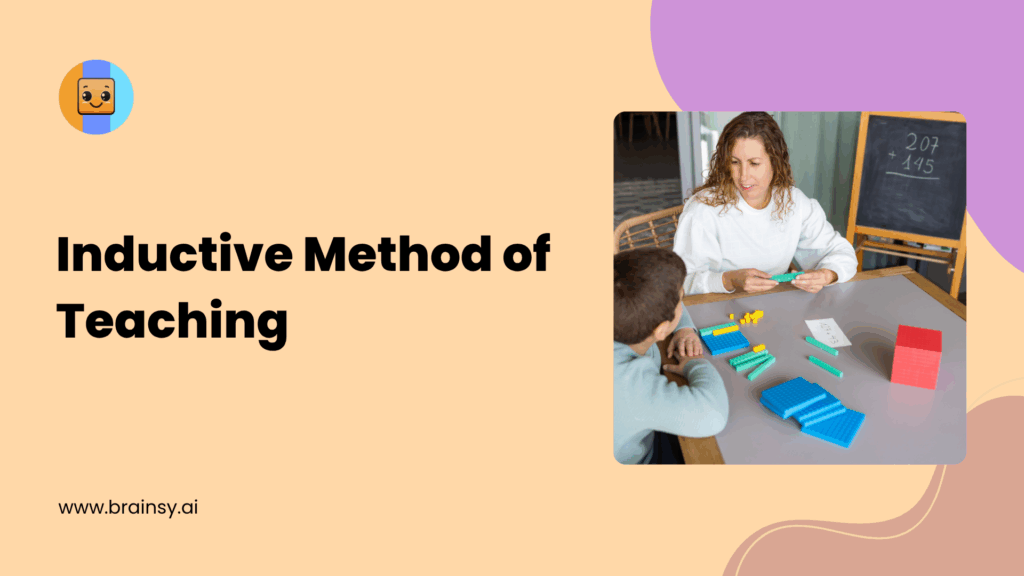
Let’s start with a simple definition. The inductive method of teaching is a student-centered strategy where learning begins with specific examples, observations, or data. Students examine these specifics, look for patterns, and work together to formulate a general rule, concept, or theory on their own.
Think of it as the opposite of a traditional lecture. Instead of starting with the rule (“Here is the formula for photosynthesis”), you start with the evidence (“Let’s look at what happened to these plants under different lights”). The core principle is learning through observation and pattern recognition. This method champions discovery and exploration, making students the primary architects of their understanding.
It’s crucial to understand how this differs from its counterpart:
- Inductive Method: Specific Examples ➔ Student Analysis & Pattern Finding ➔ General Rule (Student-Discovered)
- Deductive Method: General Rule (Teacher-Given) ➔ Specific Examples ➔ Application and Practice
The inductive approach is all about the journey. It values the process of questioning, analyzing, and reasoning just as much as the final answer.
Inductive vs. Deductive Teaching: Choosing the Right Tool
Understanding when to use inductive or deductive methods is the mark of a master teacher. They are complementary tools, each with its own strengths. Here’s a clear comparison to help you decide:
Feature | Inductive Method | Deductive Method |
Starting Point | Specific examples, cases, or problems. | A general rule, definition, or principle. |
Student Role | Active investigator. Analyzes data to discover the rule. | Active applicant. Listens, then uses the given rule to solve problems. |
Teacher Role | Facilitator, guide, and question-poser. | Director, explainer, and model. |
Primary Goal | To develop critical thinking, reasoning, and conceptual understanding. | To ensure efficient mastery and application of a known procedure. |
Best Used For | Introducing new concepts, exploring patterns, fostering deep inquiry. | Reviewing known concepts, practicing skills, covering foundational facts efficiently. |
Simply put: Use inductive teaching when you have time for discovery and want to build deep, flexible understanding. Use deductive teaching when you need to be efficient with time or establish a clear, unambiguous procedure.
Why It Works: The Tangible Benefits for Your Classroom
When done well, the inductive approach yields remarkable benefits that go far beyond memorization:
Builds Durable, Deeper Understanding
Concepts students discover for themselves are understood more profoundly and remembered longer. They own the knowledge.
Develops Essential Future Skills
This method naturally exercises critical thinking, problem-solving, analytical reasoning, and collaboration. These are the exact skills demanded in higher education and modern careers.
Increases Engagement and Motivation
The sense of curiosity and ownership that comes from “figuring it out” is a powerful intrinsic motivator. Students are more invested in the learning process.
Mimics Real-World Learning
- Scientists, historians, and professionals don’t just memorize answers; they observe the world and develop conclusions. Inductive teaching replicates this authentic process.
A strong inductive lesson also inherently supports positive Classroom Management Strategies. When students are actively engaged in meaningful investigation, off-task behavior often decreases because their curiosity is harnessed.
The Real-World Challenges (And How to Overcome Them)
No method is perfect. Being honest about the challenges of the inductive method allows you to plan for success.
- It Can Be Time-Consuming: Discovery takes time. You cannot cover as much breadth as you might with direct lecture.
- Solution: Use it strategically for key concepts. Don’t try to make every lesson inductive. A hybrid approach is often best.
- Solution: Use it strategically for key concepts. Don’t try to make every lesson inductive. A hybrid approach is often best.
- It Requires Careful Planning and Facilitation: Your role shifts from information-giver to guide. This requires preparing great examples and crafting guiding questions.
- Solution: Start small. Use a short, 15-minute inductive activity before explaining the rule. Leverage AI Lesson Plan Tools to help generate and structure inquiry-based activities tailored to your topic.
- Solution: Start small. Use a short, 15-minute inductive activity before explaining the rule. Leverage AI Lesson Plan Tools to help generate and structure inquiry-based activities tailored to your topic.
- Students (and Sometimes Parents) Can Feel Uncertain: Some learners are uncomfortable without immediate, clear-cut answers from the teacher.
- Solution: Set clear expectations. Explain why you’re using this method. Reassure students that the struggle is part of the learning. Use your Learning Management System for Schools to post supportive resources and examples for students who need extra scaffolding.
- Solution: Set clear expectations. Explain why you’re using this method. Reassure students that the struggle is part of the learning. Use your Learning Management System for Schools to post supportive resources and examples for students who need extra scaffolding.
- Assessment Requires Nuance: Testing only for the final “rule” misses the point. You must also assess the thinking process.
Solution: Use rubrics that value reasoning, use of evidence, and collaboration. Include reflective writing or portfolio assessments.
Inductive Method in Action: Clear Examples Across Subjects
Let’s make this concrete. Here’s how the inductive method of teaching looks in different classrooms:
In a Math Class (Algebra):
- Step 1 – Specific Examples: The teacher gives students the equations: 2 + 3 = 5, 4 + 1 = 5, 7 + (-2) = 5.
- Step 2 – Student Investigation: Students work in pairs to see what’s happening. They might create more examples.
- Step 3 – Rule Formation: Through discussion, students verbalize the concept: “You can have different pairs of numbers that add up to the same sum.” This naturally leads into a deeper understanding of number pairs and inverse operations.
In a Science Class (Biology):
- Step 1 – Specific Examples: Students are given images of a bird’s wing, a dolphin’s flipper, and a human arm.
- Step 2 – Student Investigation: They analyze bone structure (humerus, radius, ulna), discussing similarities and differences in function.
- Step 3 – Rule Formation: Students hypothesize about common ancestry, arriving at the concept of homologous structures and evidence for evolution.
In an English Language Arts Class:
- Step 1 – Specific Examples: Students read three short poems that use vivid imagery.
- Step 2 – Student Investigation: They highlight powerful descriptive words and discuss the emotions or pictures these words create.
- Step 3 – Rule Formation: The class co-creates a definition of “imagery” and its purpose in writing, which is far more meaningful than a dictionary definition.
Building Your Inductive Teaching Toolkit: Practical Strategies
Ready to try it? Here’s a practical, step-by-step framework you can adapt for any grade or subject:
- Select Your “Evidence” Carefully: Choose 3-5 specific, clear, and engaging examples, data sets, images, or case studies. They must clearly point toward the concept you want students to discover.
- Pose a Guiding Question: Frame the inquiry with an open-ended question like, “What pattern do you see?” or “What might explain all of these outcomes?”
- Structure the Investigation: Have students work in small groups to analyze the examples. Provide graphic organizers (T-charts, Venn diagrams) to help them sort information.
- Facilitate, Don’t Tell: Circulate and ask probing questions. “What made you group those together?” “What’s another way to look at this?” Resist the urge to give the answer.
- Share and Synthesize: Bring the class together. Have groups share their observations. Guide them to combine insights and verbally formulate the general rule or concept.
- Formalize and Apply: Only after discovery, present the formal terminology or rule. Then, have students immediately apply their new understanding to a fresh example or problem.
To manage the facilitation challenge, explore AI Tools for Teachers. These can help generate differentiated examples or provide instant, small-group feedback, allowing you to focus on high-level guidance.
The Modern Classroom: Integrating Inductive Teaching with Technology
The inductive method of teaching is perfectly suited for today’s tech-enabled classroom. Technology isn’t a distraction; it’s a powerful partner for inquiry.
- Gathering and Analyzing Data: Students can use sensors, online databases, or surveys to collect real-world data for analysis, making the discovery process authentic.
- Simulations and Virtual Labs: Platforms offer safe, accessible environments for students to run experiments, observe outcomes, and form hypotheses—ideal for inductive science learning.
- Collaborative Discovery: Digital whiteboards (like Jamboard) and shared documents allow groups to compile observations and build their case together in real-time, both in class and remotely.
- Personalized Support: An AI study assistant for exam preparation can be invaluable after the inductive lesson. Once students have discovered a concept (e.g., the laws of motion), they can use such tools to generate practice problems, get explanations, and solidify their self-constructed knowledge.
Conclusion: Empowering Learners to Think for Themselves
The true power of the inductive method of teaching isn’t just in the content learned, but in the mindset it builds. It teaches students that they are capable thinkers. It shows them that knowledge isn’t just a list of facts to receive, but a landscape to be explored and mapped.
This approach prepares them not for a test, but for life where problems are complex and answers aren’t in the back of the book. It cultivates curiosity, resilience, and the confidence to tackle the unknown.
Start with one lesson. Choose a concept where understanding why is more important than memorizing what. Plan your examples, prepare your key question, and guide your students through the discovery. You might be surprised by the depth of insight they achieve. And remember, you’re not abandoning other methods; you’re adding a powerful, student-empowering tool to your teaching arsenal.
Frequently Asked Questions.
Q 1. What is the inductive method of teaching?
It’s a “discovery-first” approach. You start with specific examples and guide students to analyze them, spot patterns, and formulate the general rule themselves. It makes them active investigators, not passive listeners.
Q 2. What's the difference between inductive and deductive teaching?
Inductive: Examples ➔ Student Discovery ➔ Rule. (Best for deep understanding).
Deductive: Rule ➔ Examples ➔ Application. (Best for efficient practice). They’re complementary tools.
Q 3. Is the inductive method too time-consuming?
It can be, so use it strategically. Don’t use it for every lesson. Start with short, 15-minute activities focused on key concepts. AI lesson plan tools can help generate examples quickly.
Q 4. Can I use it for math and science?
Yes, it’s excellent for both. Use it for pattern recognition in math or data analysis in science. The guide provides ready-to-use examples for algebra, biology, and English.
Q 5. How do I assess it?
Assess the thinking process, not just the answer. Use rubrics for reasoning, evidence, and collaboration. Reflective journals and presentations work well to evaluate understanding.
Q 5. How do I assess it?
Tech supercharges inquiry. Students use tools for data collection, virtual labs, and collaborative analysis. An AI study assistant is great for personalized follow-up practice after discovery.